
Module 3 - Good Health and Well-being
A. PRE-ACTIVITIES
1. Introduce Health and Well-Being
Begin by thinking about what it means to be healthy. Then, try to answer these questions:
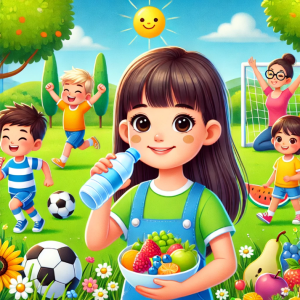
- What does it mean to be healthy?
- What does it feel like to be happy?
- Why do we need water?
- How does clean water help people’s lives?
Note: To feel good and be happy is known as “well-being”
2. Explore the Back and Front Cover
Go to the link to explore the book: The Water Warrior
Start by examining the front cover of “The Water Warrior”
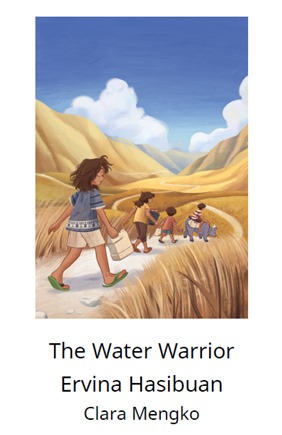
Pay attention to the details of the image and title. Notice what the girl is holding and look at the landscape around her. The hills and grass may give you clues about where the story takes place. Imagine where the children in the picture might be going. Then, based on what you see, try to predict and answer these questions:
- What do their expressions and actions tell you about their personalities? Imagine what kind of people they are based on their expression in the story.
- What is the girl holding? What is this container usually for?
- Where do you think the girls are from?
- What do you think might happen to the children on their journey through the hills?
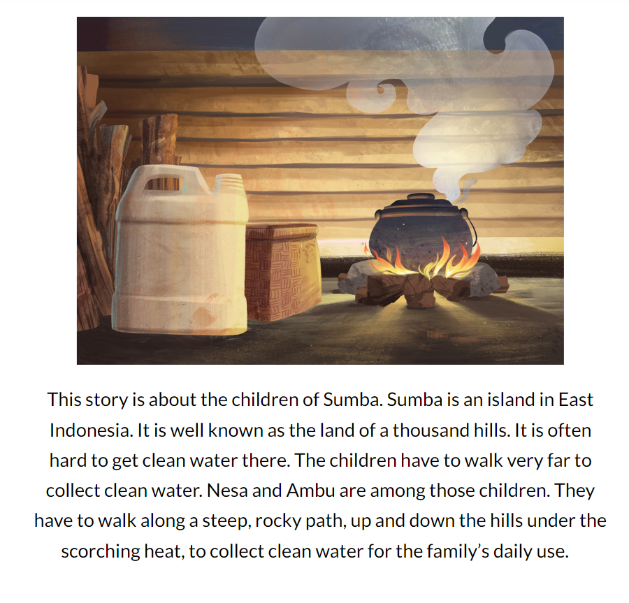
Next, take a look at the back cover and read the summary. This will give you more insight into the story. Use your knowledge and your observation to answer these questions:
- Read the summary on the back cover. What does it tell you about the story?
- What do you think the water containers and the pot on the fire are used for?
- Why do you think collecting water might be important in this story?
3. Meet the Author
Before you read further start by reading a brief introduction about the author. You can discuss the following questions in groups and find the answer.
- Who wrote the book The Water Warrior?
- Have you ever read another book by the same author?
- Search for the Author’s name on the internet. What information do you find?
B. MAIN ACTIVITIES
1. Read and Enjoy the Story
In this activity, you will either listen to your teacher or a classmate read The Water Warrior aloud, or you will read it yourself. Explore the book further by clicking on the book link. Pay close attention to the pictures and answer the following questions:
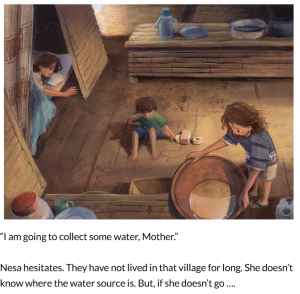
Orientation Questions:
1. Who are the main characters in the story?
2. What kind of person is Nesa?
3. Where does the story take place?
4. When does the story happen?
Complication Questions:
1. What problems do the characters face in the story?
2. Why is it difficult for Nesa and her friends to collect water?
3. How do the challenges affect Nesa and her friends during their journey?
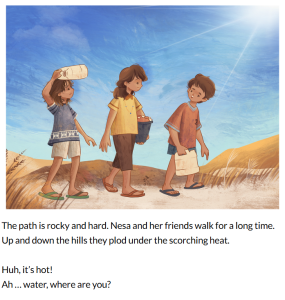
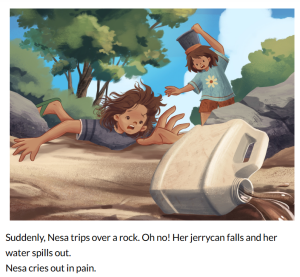
Resolution Questions:
1. What happens after Nesa spills her water?
2. How does Nesa solve her problem?
3. Why is Nesa proud of herself by the end of the story?
4. Consider why Nesa calls herself a “water warrior” at the end. What does this title reveal about her strength and determination?
2. Bring Out Your Voice
In this activity, you will reflect on the story and relate it to your own life. Discuss or write your thoughts on the following questions:
1. Why is access to clean water important for health?
2. What are some health risks that might come from drinking unsafe water, especially for families in rural areas like Nesa’s?
3. In the story, Nesa faces many challenges in collecting clean water. How would her life be different if clean water were easier to access?
4. How does Nesa’s journey to collect water show the importance of family well-being?
5. What are some solutions you have to solve the water problems faced by Nesa and her community?
3. Reflect on Your Feelings
After reading the story, take a moment to reflect on your feelings and thoughts:
Personal Response:
How did you feel after reading the story? (Choose an emoticon that matches your feelings.)
Personal Evaluation:
1. Nesa encounters some challenges in getting clean water for her family, would you like to do the same if you were Nesa?
2. How does Nesa’s determination to help her family’s health and well-being inspire you?
Personal Action:
If you were in the local government, what would you do to solve the water problem in Nesa’s village?
4. Activate Your Vocabulary
As you read the book, you will find new words that you never heard before, some words that you ever heard but did not know the meaning of, words that you ever heard and know the meaning of, and some words that you know, and you ever use the words in sentences and utterances. You can download the HeKU Table and start making lists of the words.
| Never Heard (NH) | Ever Heard, but Don’t Know (EHD) | Ever Heard and Know (EHK) | Ever Heard, Know and Use (EHKU) |
|---|---|---|---|
After learning some new words, test your vocabulary mastery and work on this exercise.
Vocabulary Exercises
As you read through the story, you encounter new words that describe the setting and the characters’ experiences. Match the words on the left to their correct definitions on the right. Use a dictionary to help you know the meaning of the words
| Word | Meaning |
|---|---|
| 1. Darted | a. A large container used for carrying liquids, especially water. |
| 2. Determination | b. Extremely hot. |
| 3. Exhausted | c. To move suddenly and quickly. |
| 4. Excitement | d. Unwilling or hesitant to do something. |
| 5. Fetch | e. To pause briefly before doing something, often due to uncertainty. |
| 6. Hesitate | f. The quality of being committed to achieving something despite difficulties. |
| 7. Jerrycan | g. To fall behind, especially due to tiredness. |
| 8. Lag | h. Extremely tired or drained of energy. |
| 9. Plod | i. To accidentally flow or fall out of a container. |
| 10. Reluctant | j. In short supply; not enough of something. |
| 11. Scarce | k. A feeling of great enthusiasm or eagerness. |
| 12. Scorching | l. To catch your foot on something and fall or almost fall. |
| 13. Stumble | m. To walk slowly with heavy steps. |
| 14. Spill | n. To trip or lose balance while walking. |
| 15. Steep | o. To go and bring something back. |
| 16. Trip | p. Rising or falling sharply, difficult to climb. |
| 17. Warrior | q. A person who fights for a cause or struggles bravely against hardship |
Now you already know the meaning of the keywords in the story. Do this exercise if you think you still need to explore more about the vocabulary!
a) Plentiful
b) Limited
c) Dirty
d) Unwanted
(Open-ended)
a) Smooth
b) Rocky
c) Paved
d) Grassy
a) Act quickly
b) Wait briefly before deciding
c) Run away
d) Refuse to go
a) Walk slowly and heavily
b) Run quickly
c) Skip lightly
d) Dance happily
a) Warm
b) Mild
c) Extremely hot
d) Cold
a) Falls down
b) Hops
c) Balances perfectly
d) Leaps
a) Lag
b) Leap
c) Jump
d) Sprint
a) A fighter in a battle
b) Someone who struggles to achieve something important
c) A soldier with a weapon
d) A student learning about water
a) Find
b) Gather
c) Lose
d) Distribute
C. EXTRA ACTIVITY
For this final activity, think about a time when you helped someone who was sick or needed assistance. Draw a storyboard of the events, and be ready to share your drawing with the class. When you share, explain what happened, why it was important, and how you felt about helping someone in need.